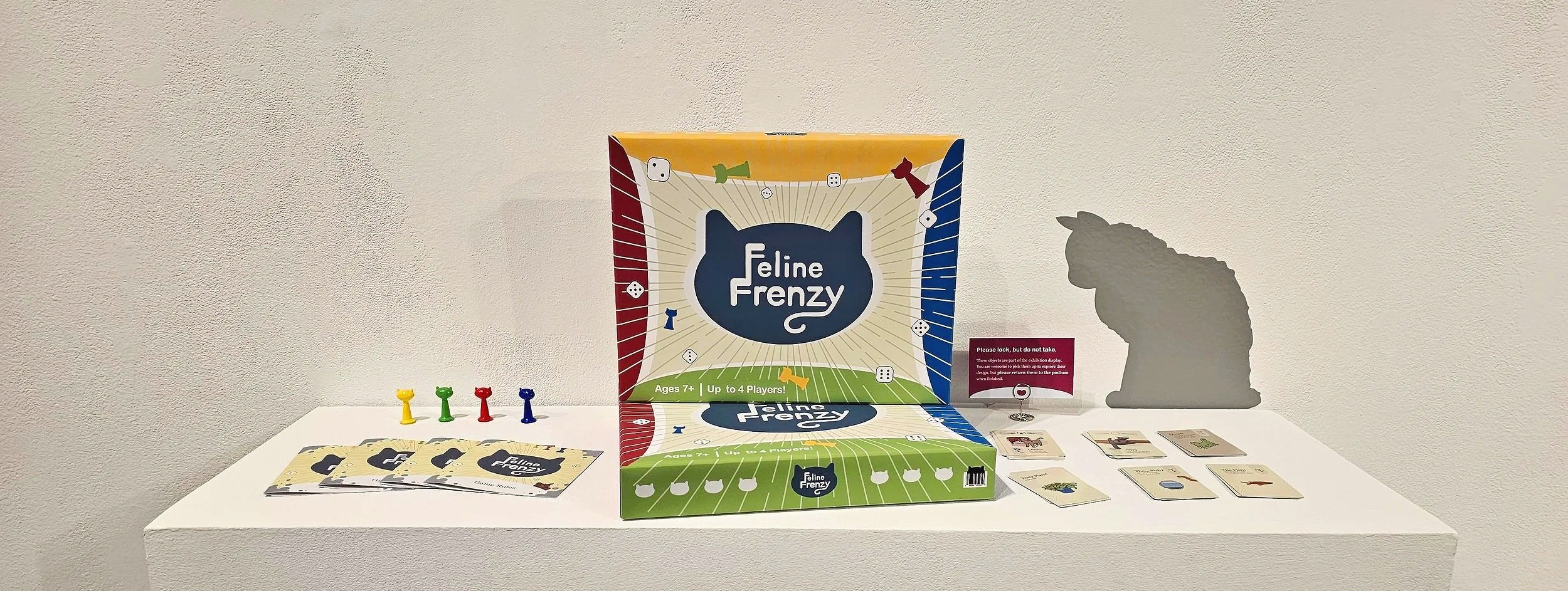
Feline Frenzy is an original tabletop game centered around a chaotic collection of cats racing to reach their food bowl first. Players lead their own small group of mischievous cats, navigating an unpredictable board and competing for resources as they try to outmaneuver one another.
This project was developed as my senior capstone and was entirely self-directed. I was responsible for every aspect of the game’s creation, including concept development, rule design, board structure, visual identity, illustration, and supporting materials. Because I’m particularly drawn to technical systems and behind-the-scenes problem solving, I chose to design a fully original board game rather than re-skin an existing format and in the end I created a total of eight projects that were displayed in a senior exhibition.
The core challenge of Feline Frenzy was creating a game that felt genuinely new. Instead of relying on a fixed board or familiar mechanics, I designed a modular board system that can be rearranged and set up differently each time the game is played. This approach allows for varied gameplay experiences while reinforcing the chaotic, playful nature of the cats themselves.

Todd, the criminal mastermind.The Cards
The card system was the first thing I started with for Feline Frenzy. The game began with the idea that each card should have its own personality, expressed through both its illustration and its gameplay function.
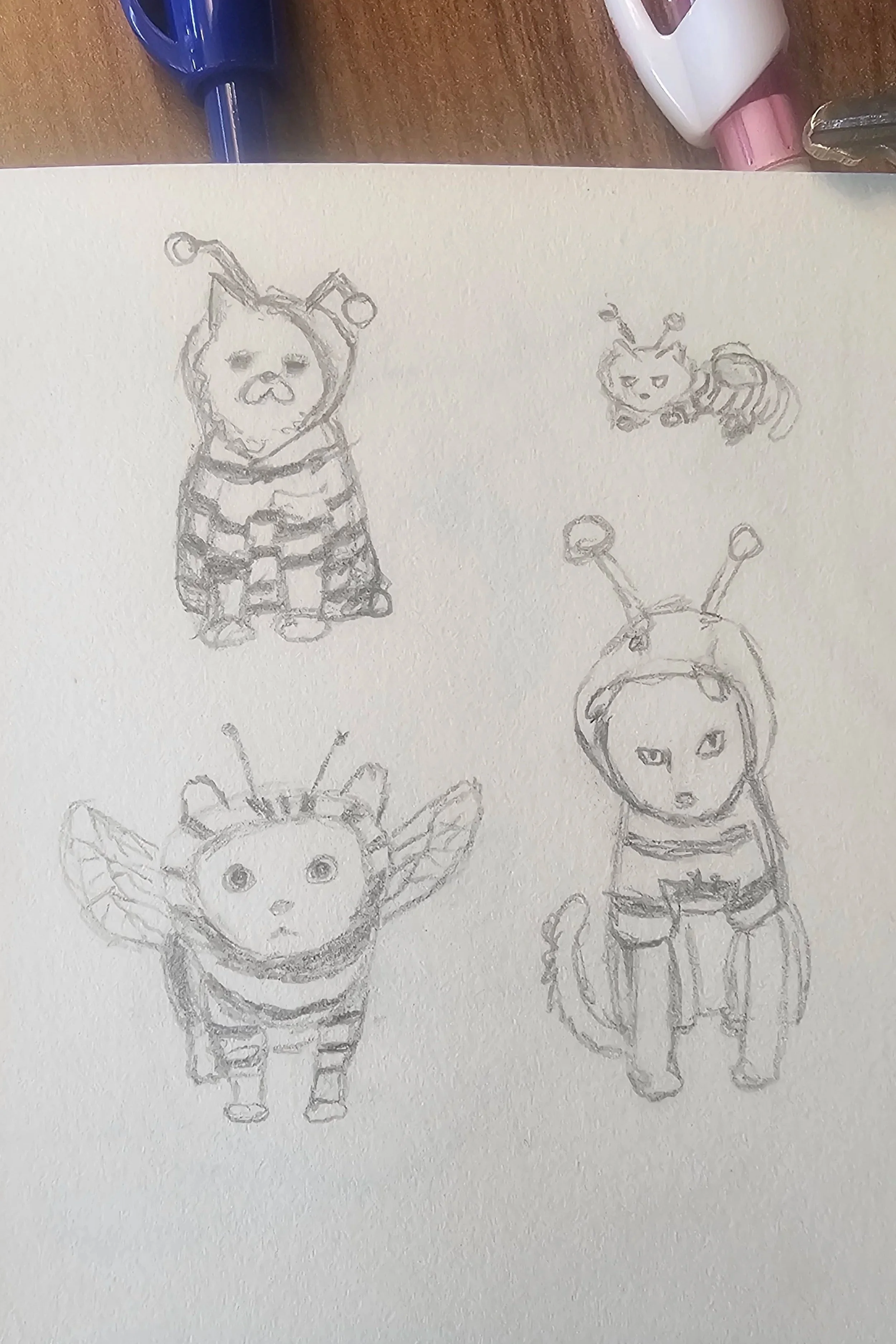
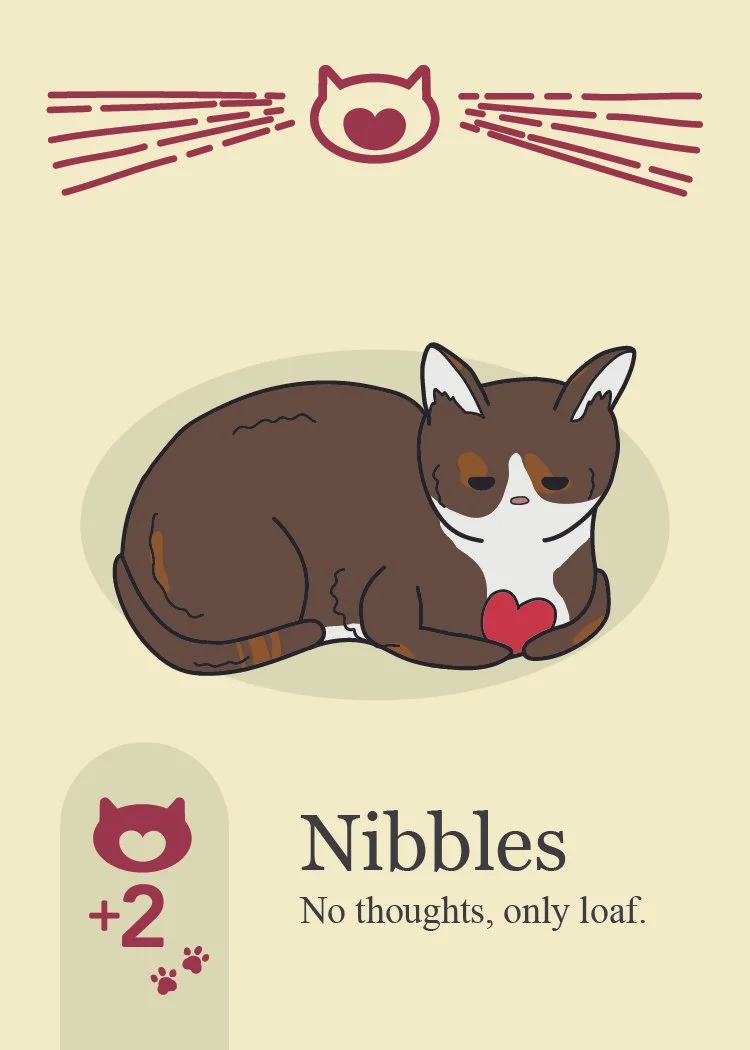
The initial set consists of eight cat cards drawn at the beginning of the game. Each cat went through multiple sketch iterations before being finalized and converted to digital. Some cat types provide strategic advantages, while others offer no bonuses, encouraging players to adapt their play style.
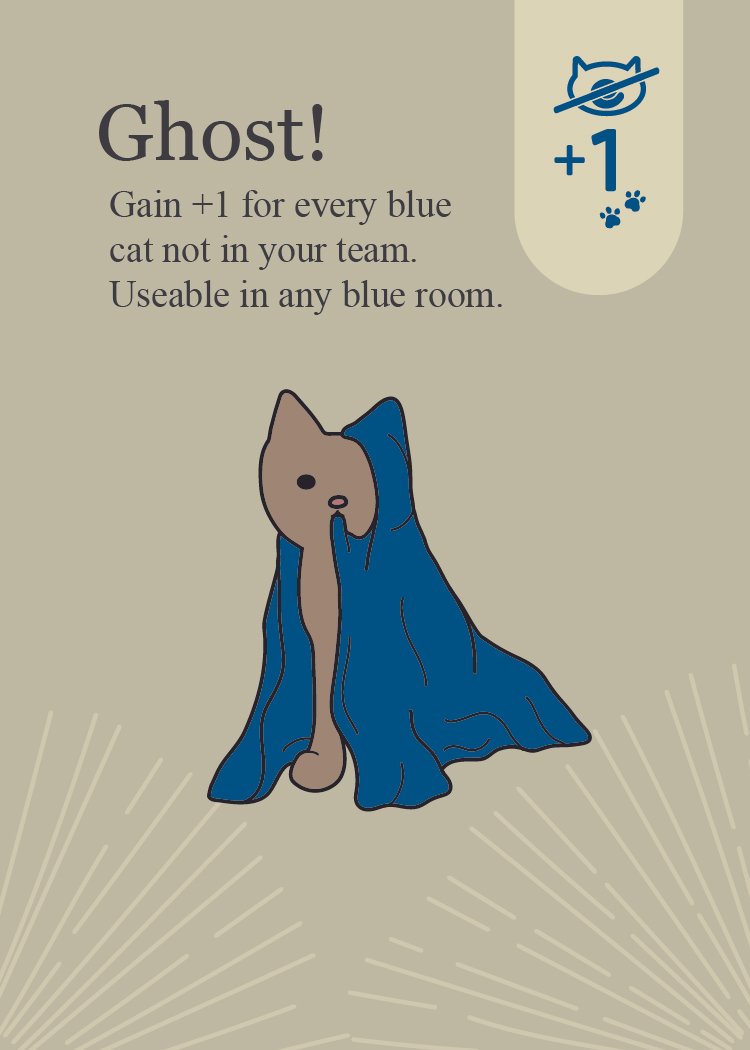
To expand the deck and introduce additional variability I added ghost cards. These cards temporarily simulate the effects of specific cat types, allowing players to access bonuses they might not otherwise have during a game. This helped balance gameplay while reinforcing the unpredictability of the system.
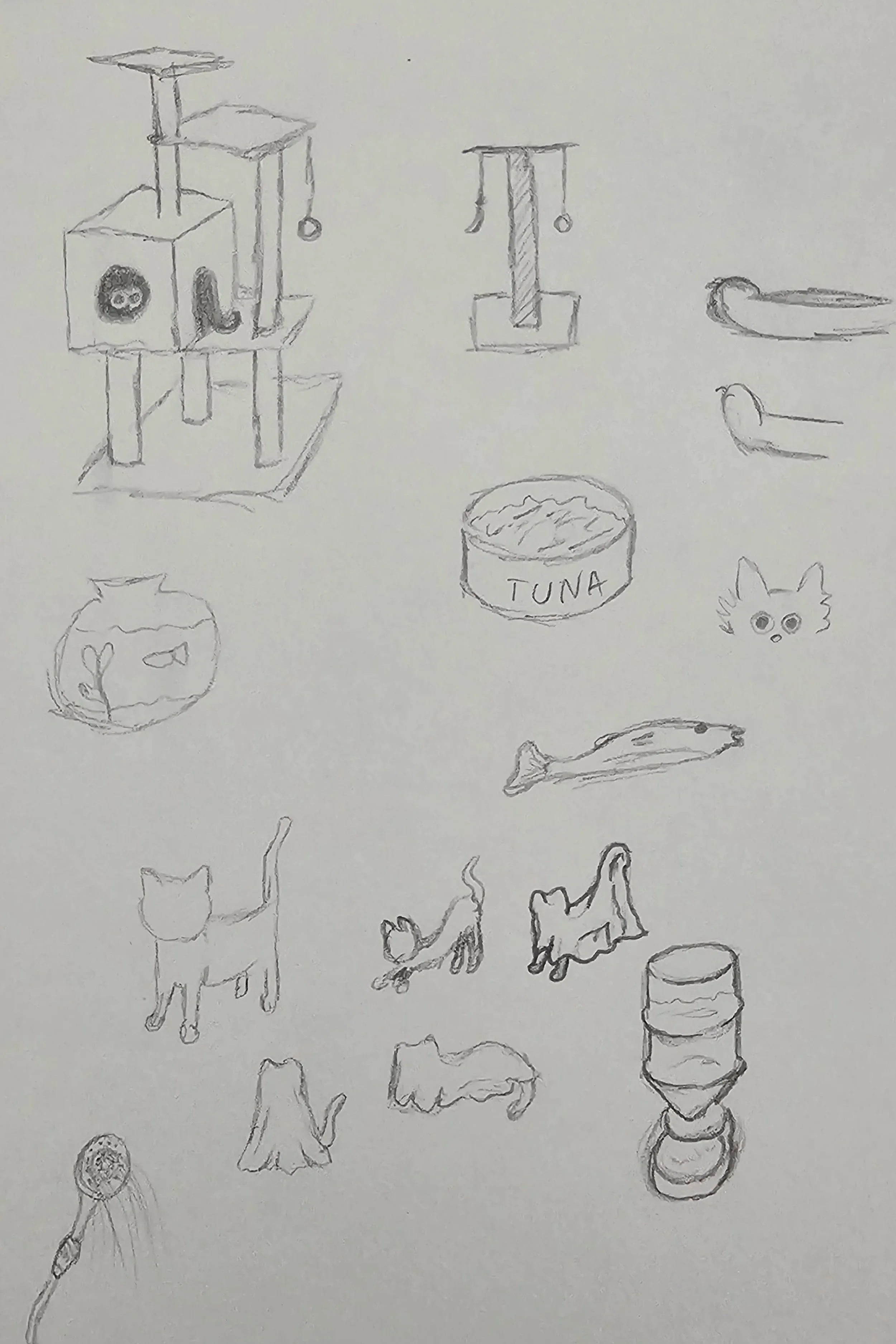
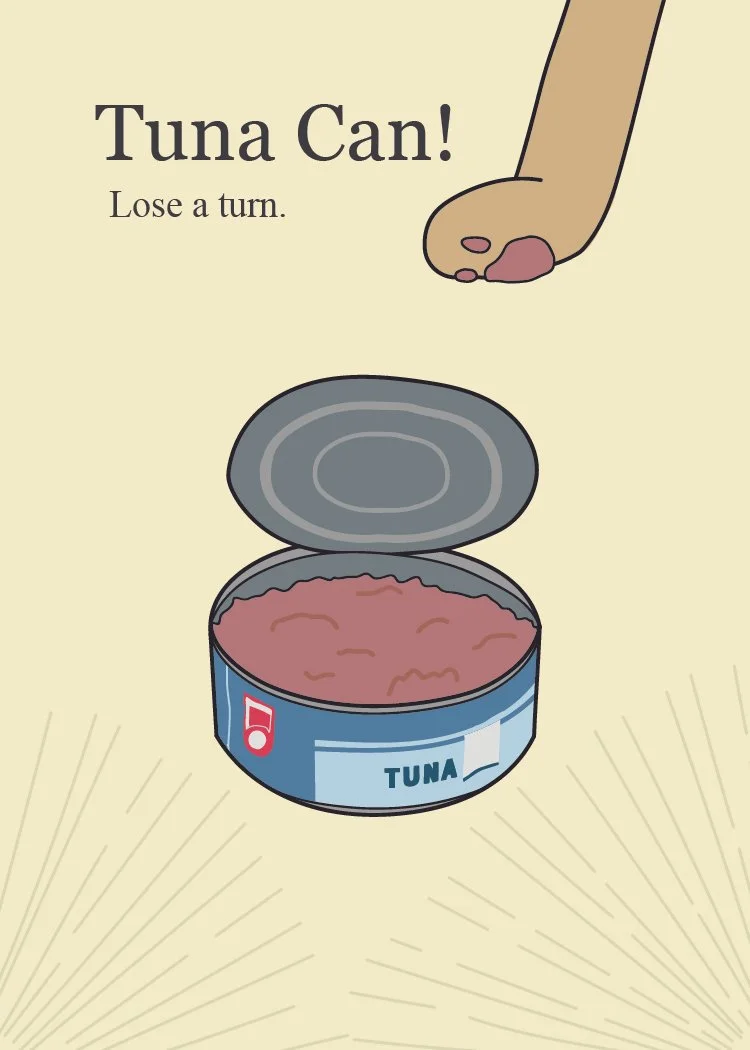
The final layer of the deck consists of twelve object cards, with two of each included in the full 36-card deck. These cards function as the core drivers of gameplay and were given particular attention during development. Both the illustrations and written descriptions were designed to convey distinct personalities, ensuring that each card feels intentional and memorable rather than interchangeable.
The Board
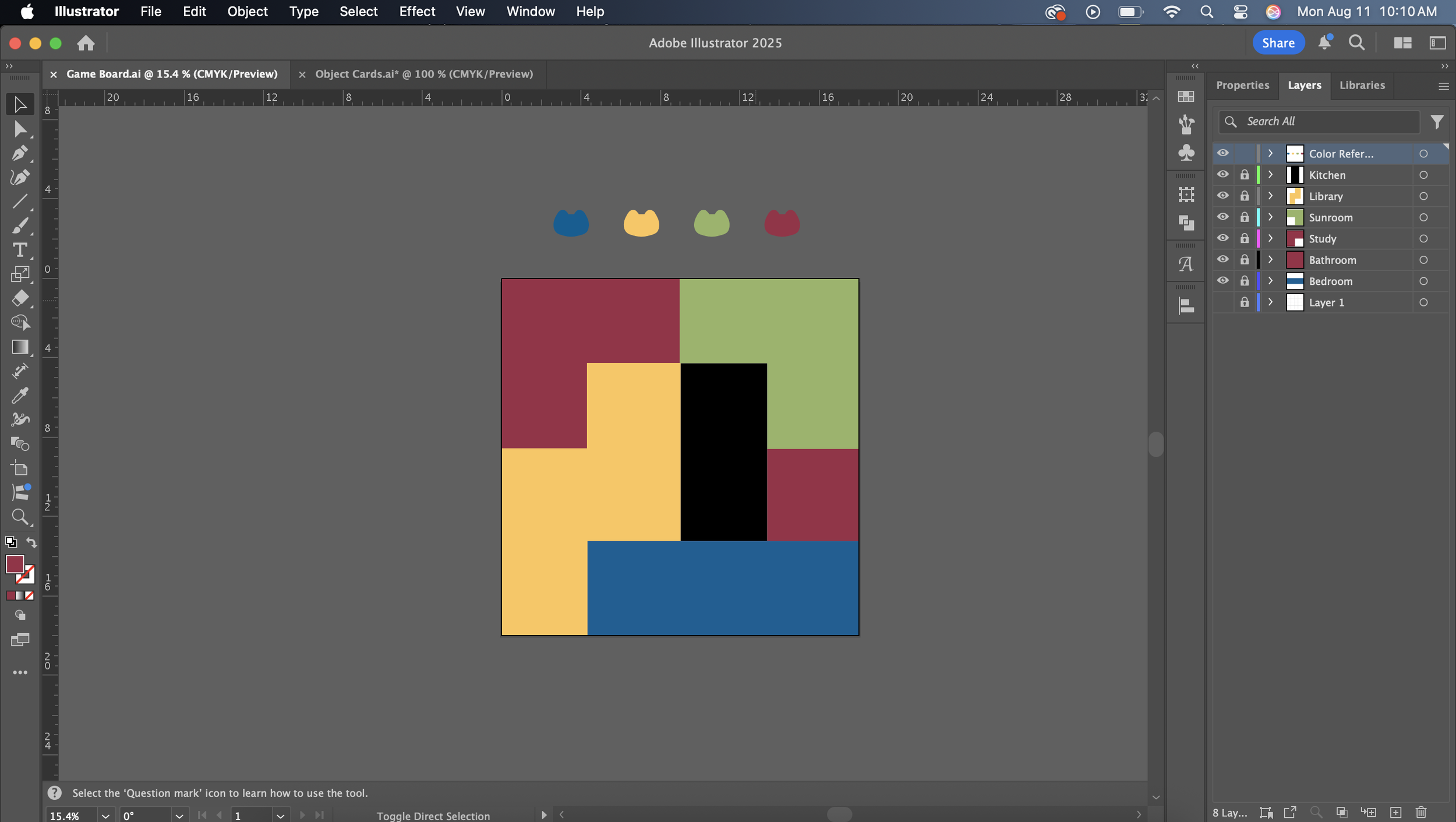
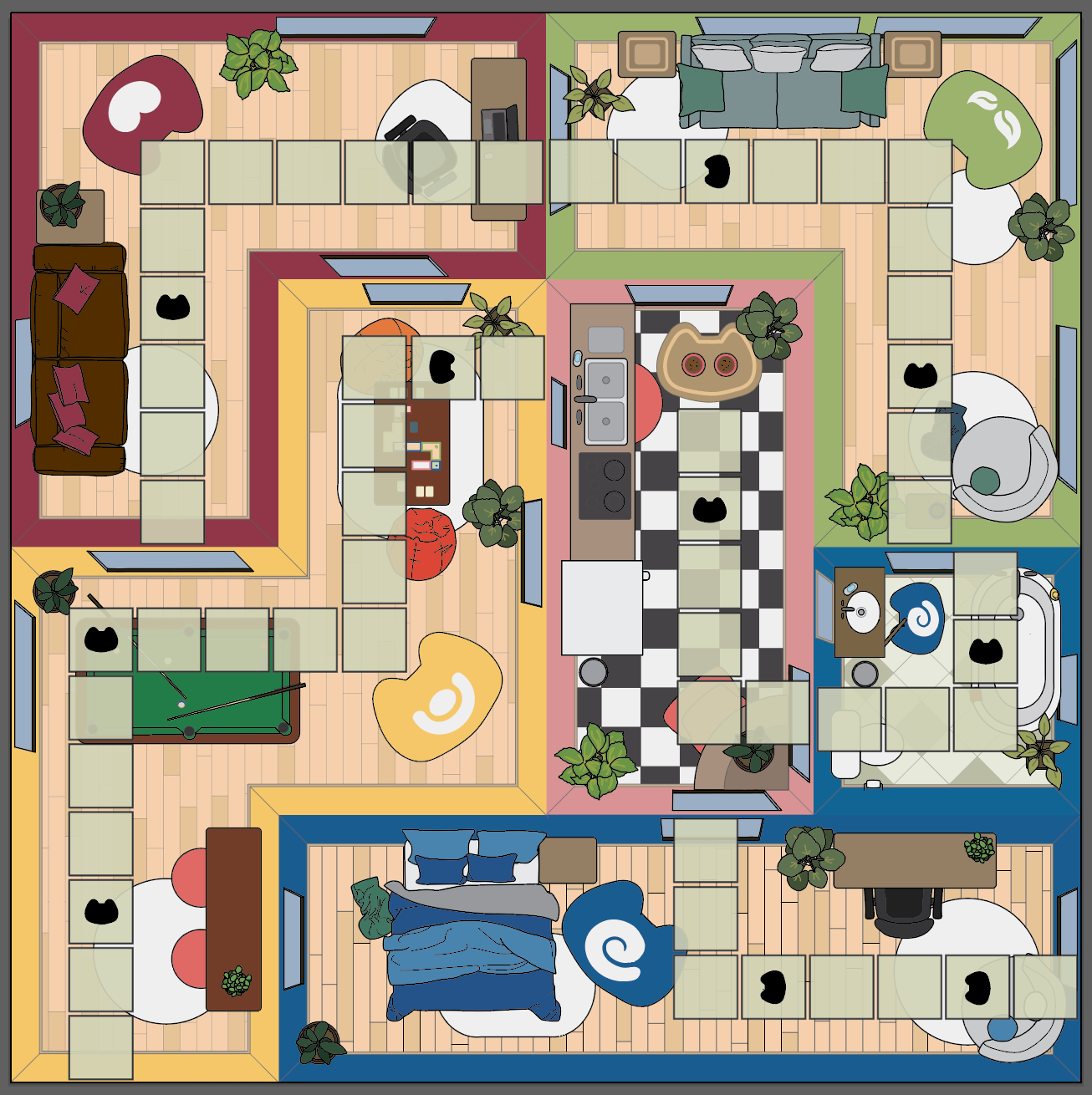
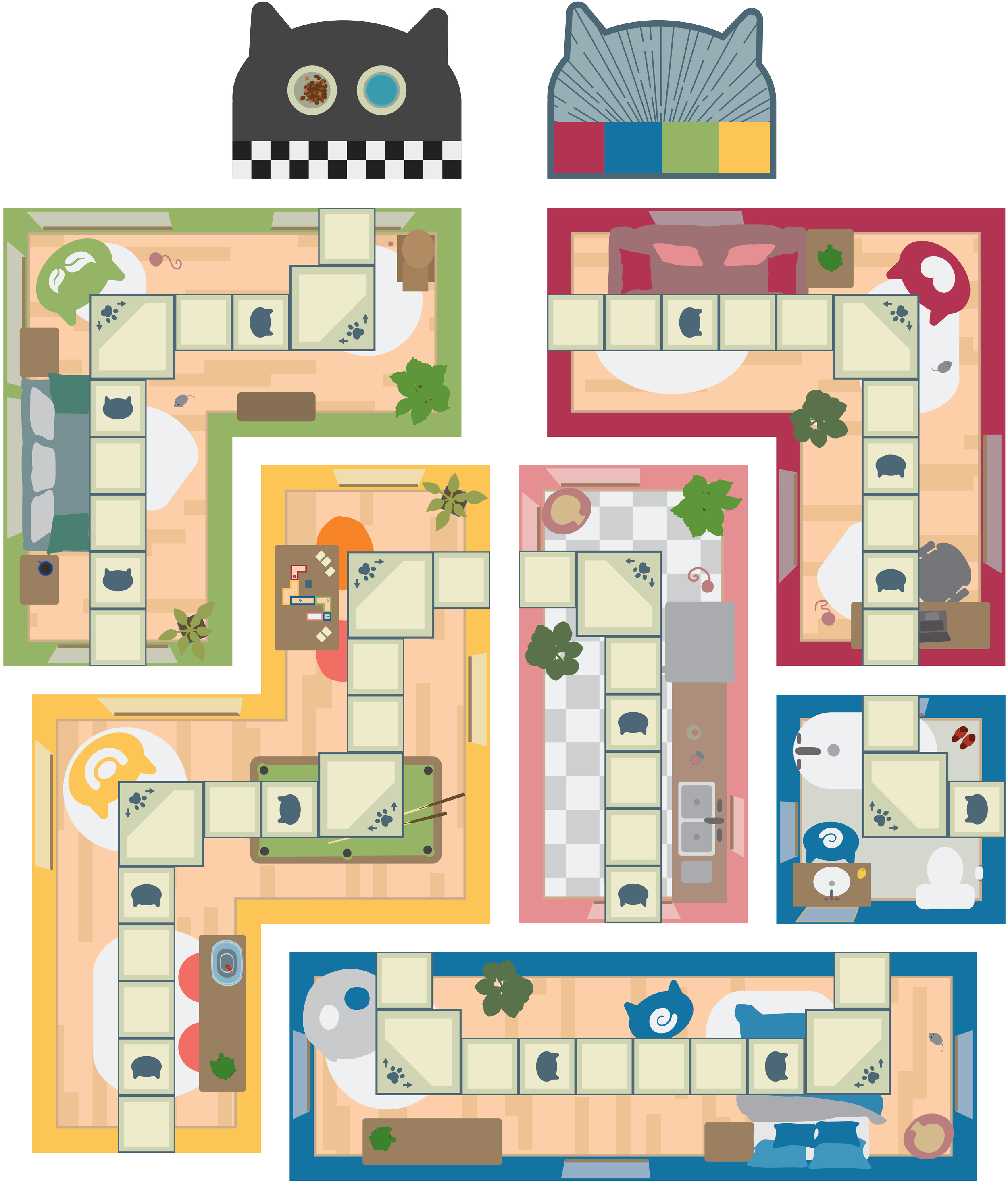
For the board, I started with an 18 × 18 inch square, I decided to take a basic chess board dimensions as the starting point, then work up. From there, the board was divided into individual “rooms,” allowing the structure to be broken apart and reassembled instead of functioning as a single fixed layout. The room shapes were intentionally irregular, drawing light inspiration from Tetris-style forms. From the beginning, the board was designed to reflect the narrative of the game: cats racing through a house to reach the food bowl. Each room references familiar household spaces and includes subtle visual cues drawn from the card illustrations and common details associated with cat ownership.
Splitting the board into multiple pieces allowed for varied setups and prevented the game from becoming predictable over time. Rather than encouraging memorization, the modular layout creates a different experience with each play session, keeping the focus on strategy and chance. The rooms are color-coded to correspond with specific cat types, which provide gameplay bonuses depending on the player’s party. These types are communicated through both the room color and a matching cat-icon rug within each space. In contrast, neutral rooms are left unmarked and do not offer bonuses, creating visual and strategic balance across the board.
The Box
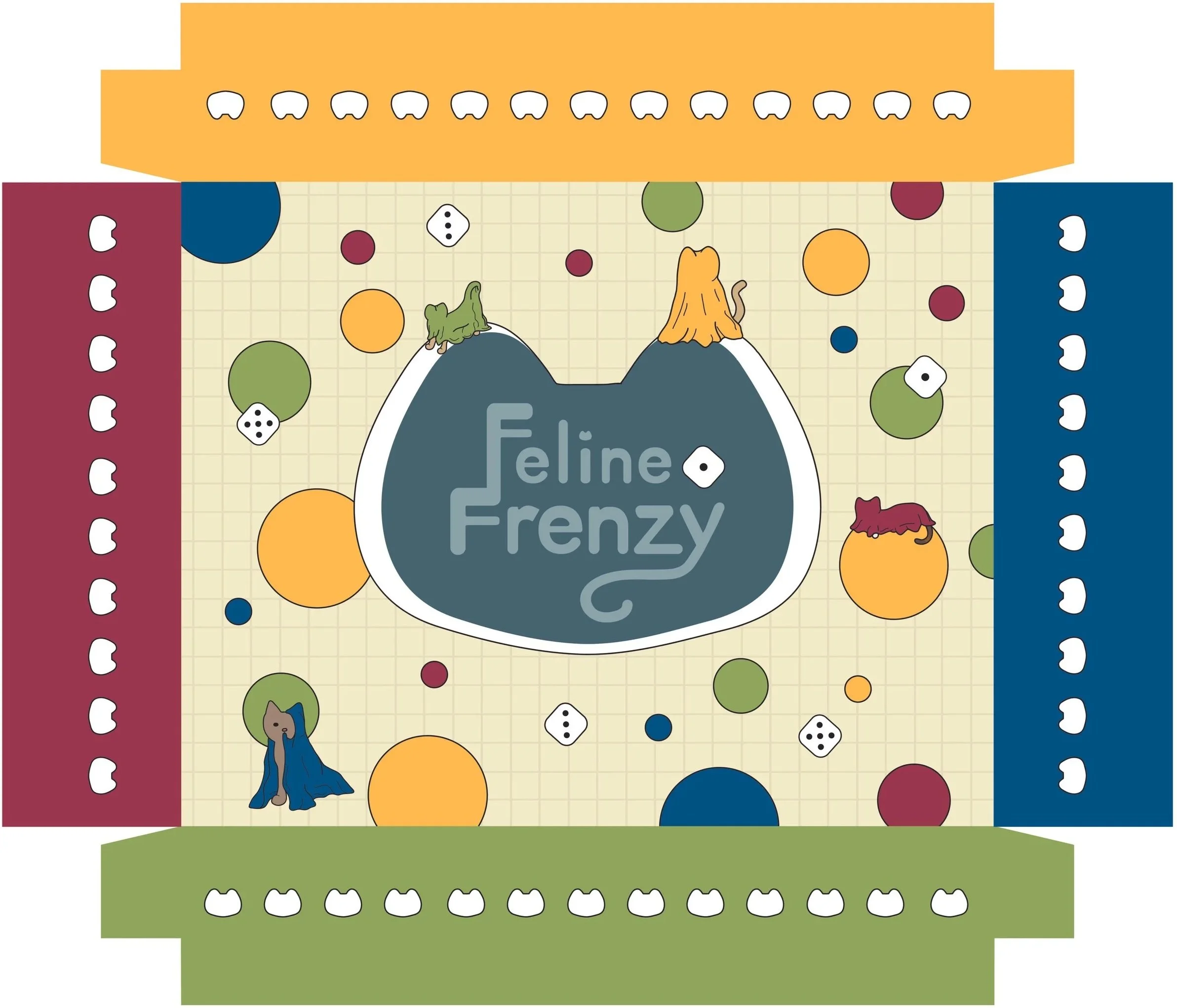
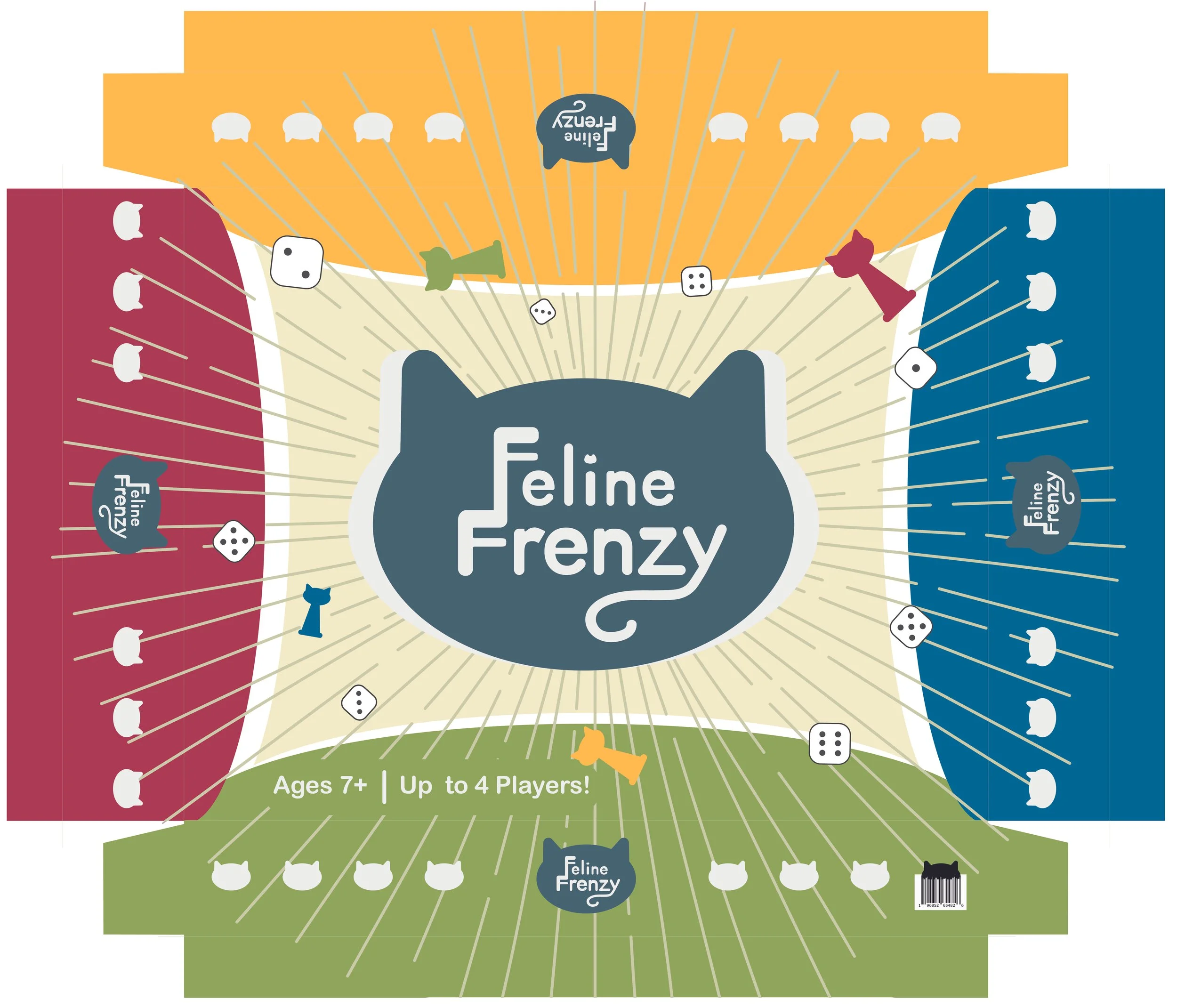
The box for Feline Frenzy was designed around the proportions of the game board, with the largest board configuration guiding the overall size. Making sure the board fit comfortably inside the box was the starting point, and the rest of the structure was built around that requirement. I made sure the box pulls from the color palette used in the board’s interior rooms and incorporates the starburst motif that appears throughout the cards and exhibition advertising in order to help the packaging feel like an extension of the game instead of a separate design element.
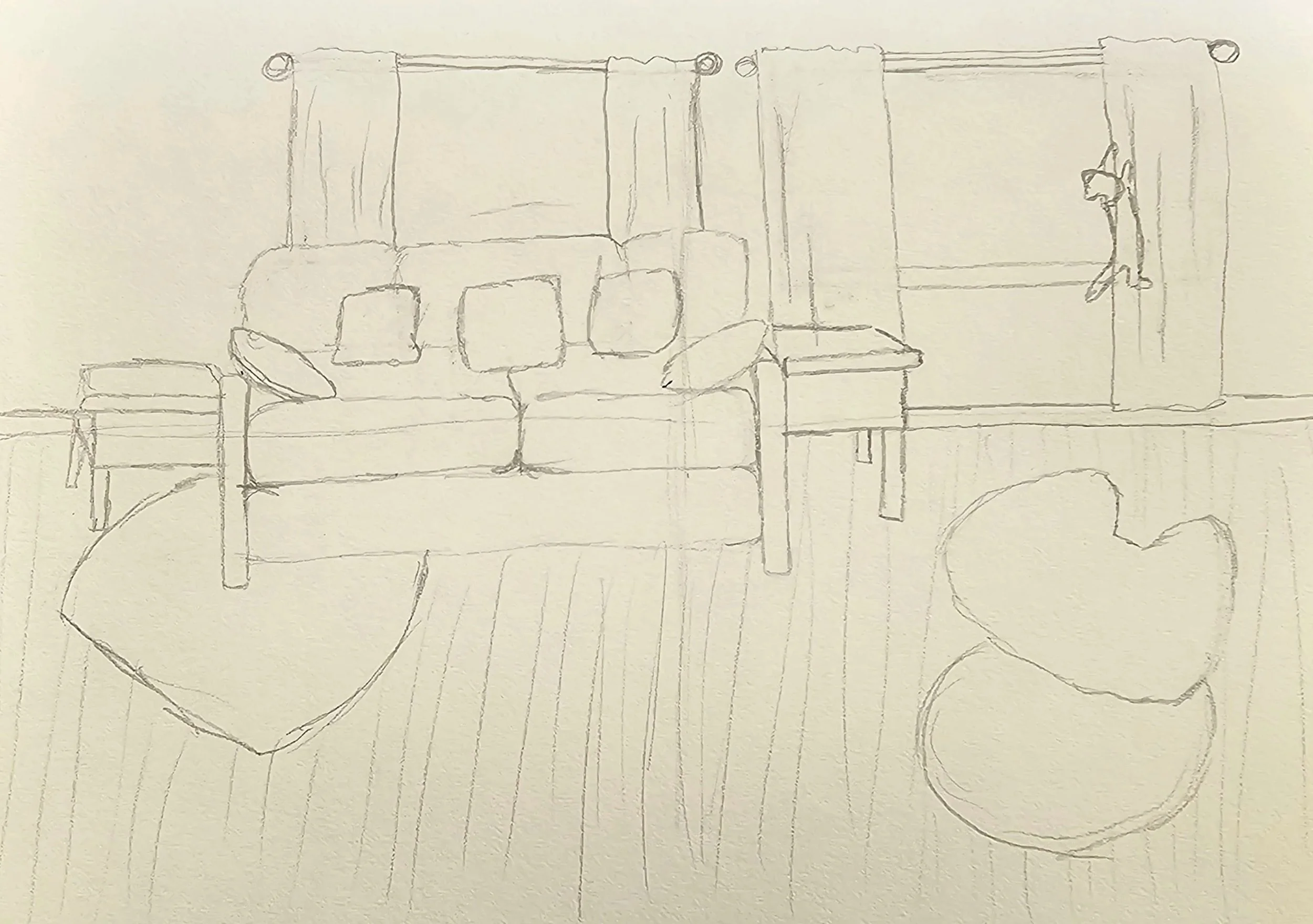
As the project developed, I looked at existing board game packaging and noticed that many commercial games rely on simpler, more restrained illustration styles. Because of this, early box concepts and initial digital versions (pictured below) were set aside in favor of a cleaner final design that better matched the tone and visual language of the rest of the project. The final box was constructed using a custom blank box sized to the longest measurements of the board, with printed artwork wrapped and applied by hand to complete the physical piece.
The Pieces
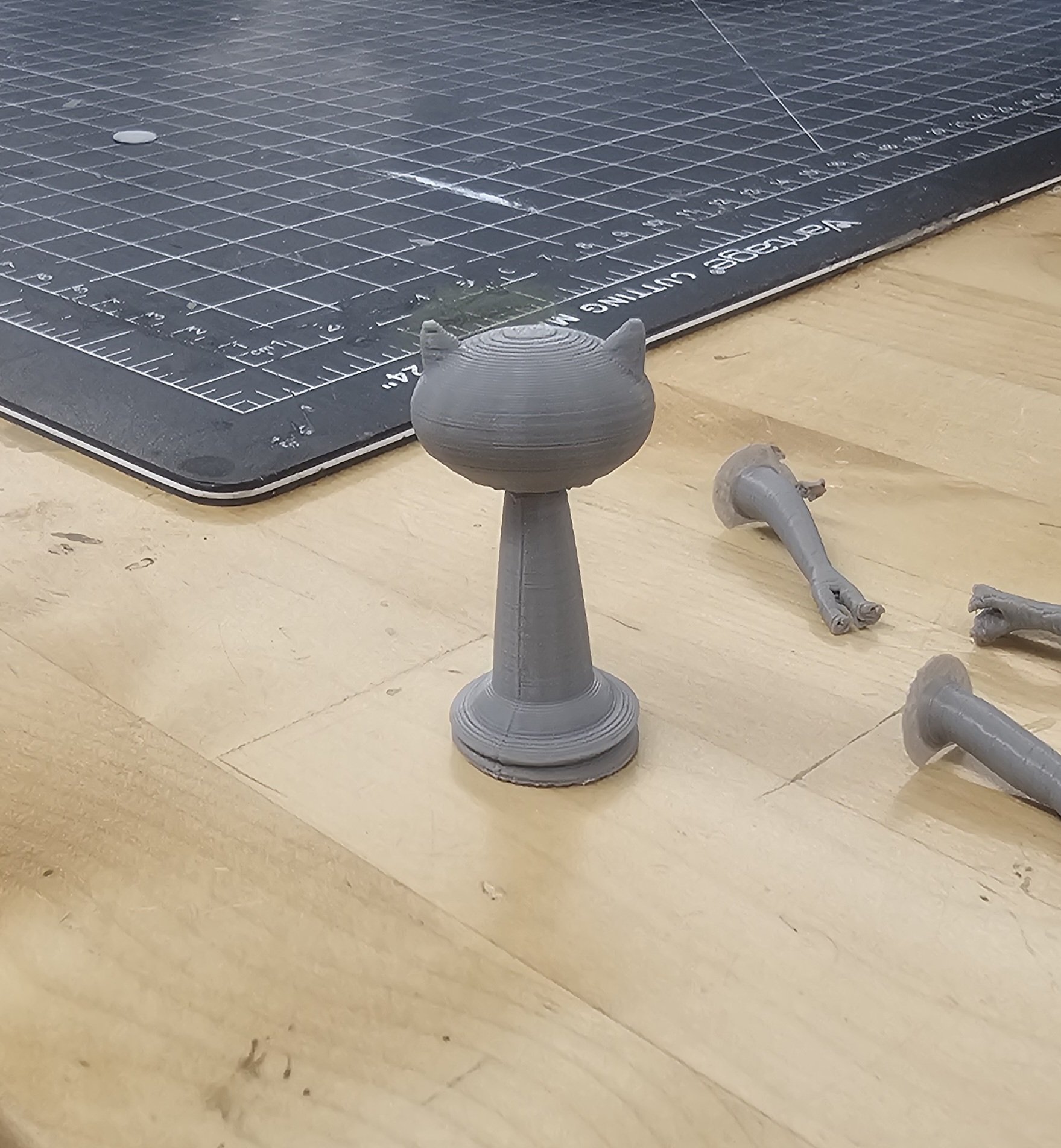
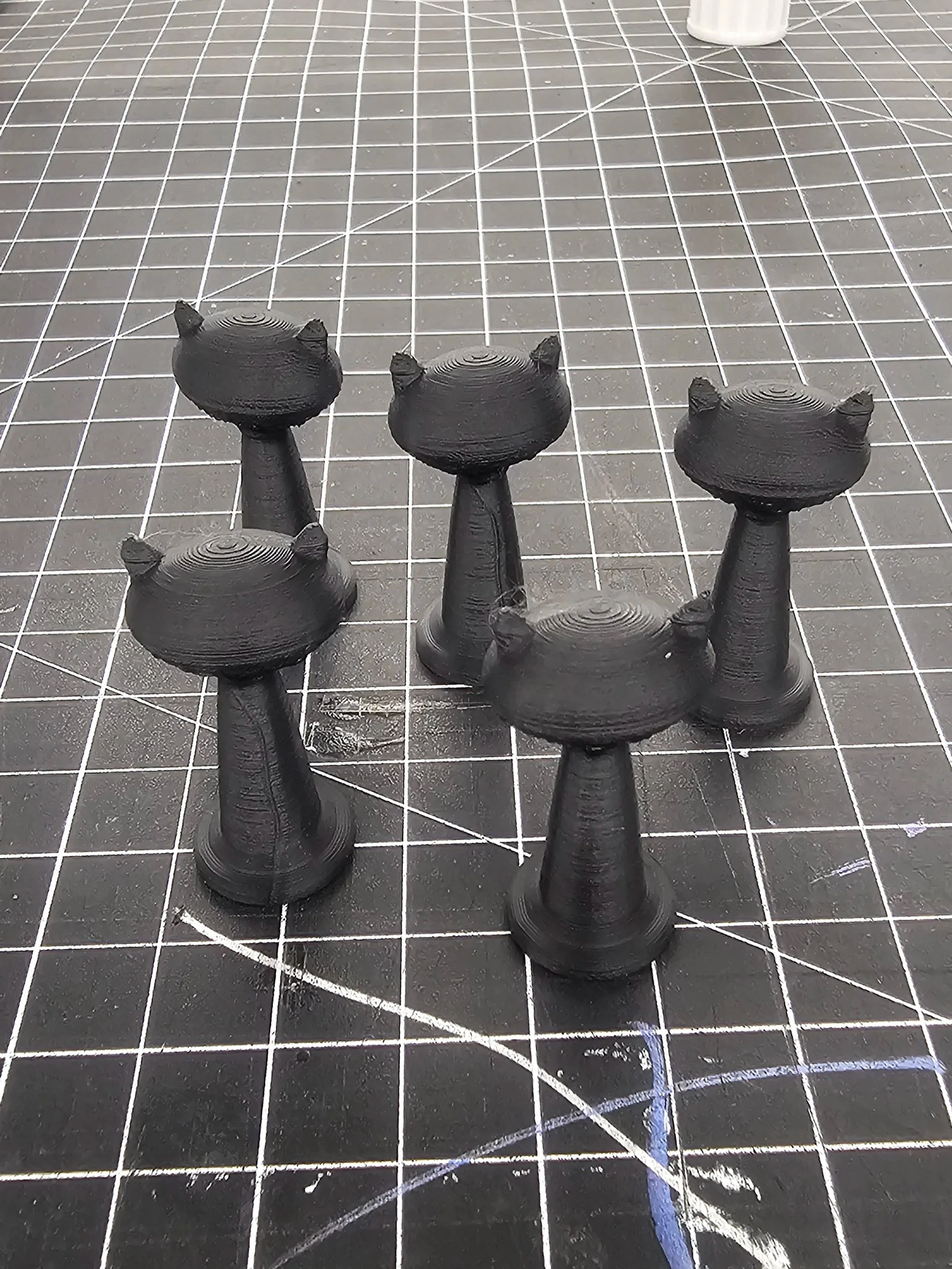
The game pieces were developed during the final stage of Feline Frenzy and were designed to reinforce the visual language established throughout the project. Each piece was 3D printed, sanded, and painted by hand.
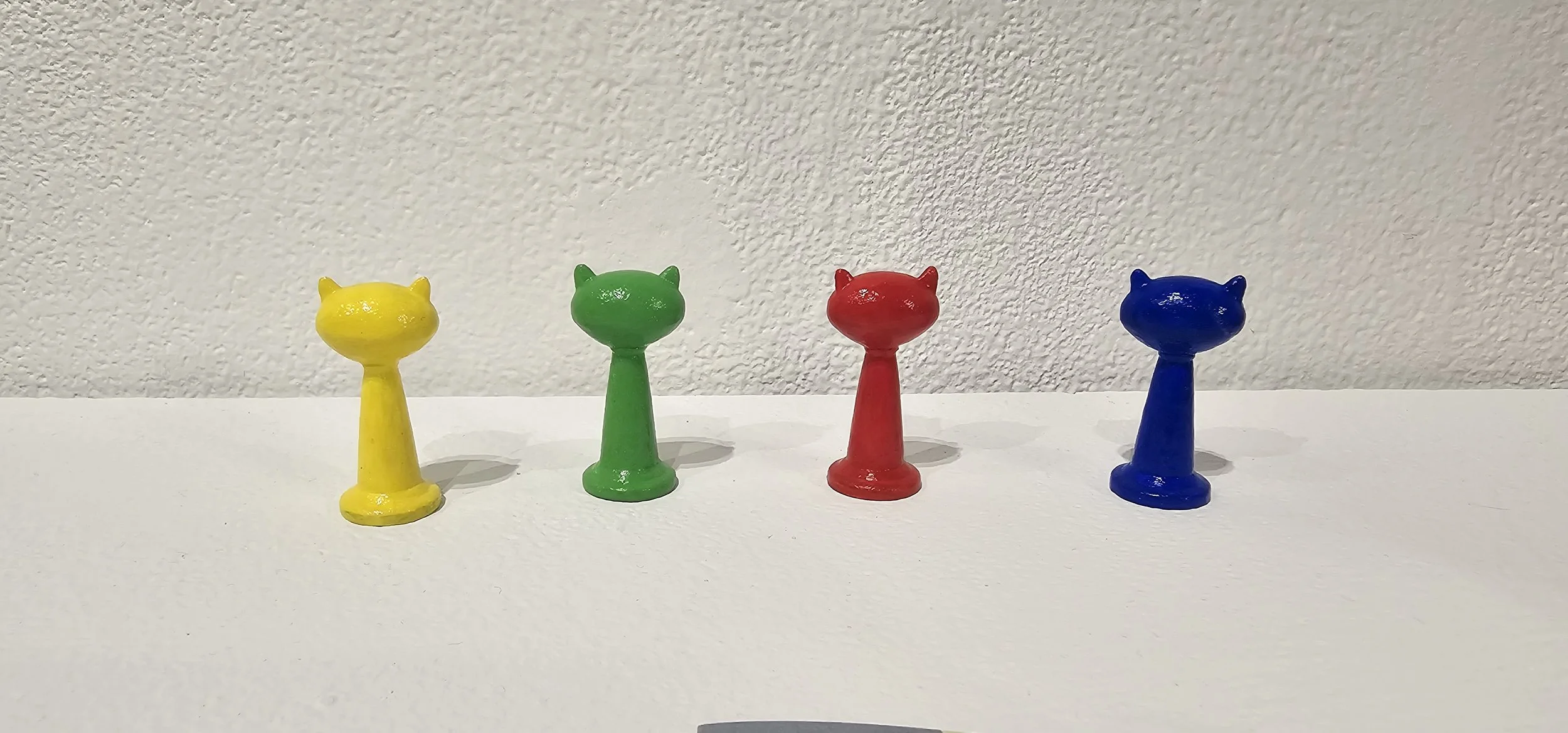
To maintain consistency across the game system, I wanted the pieces to be shaped to mirror the cat head icons used in the cards and board. This allowed the physical components to feel directly connected to the illustrated elements rather than appearing as generic markers.
Each piece was coated with multiple layers of white primer to create an even surface. Final colors were then layered to match the established palette used for the card types, board rooms, and box design.
The Rule Book
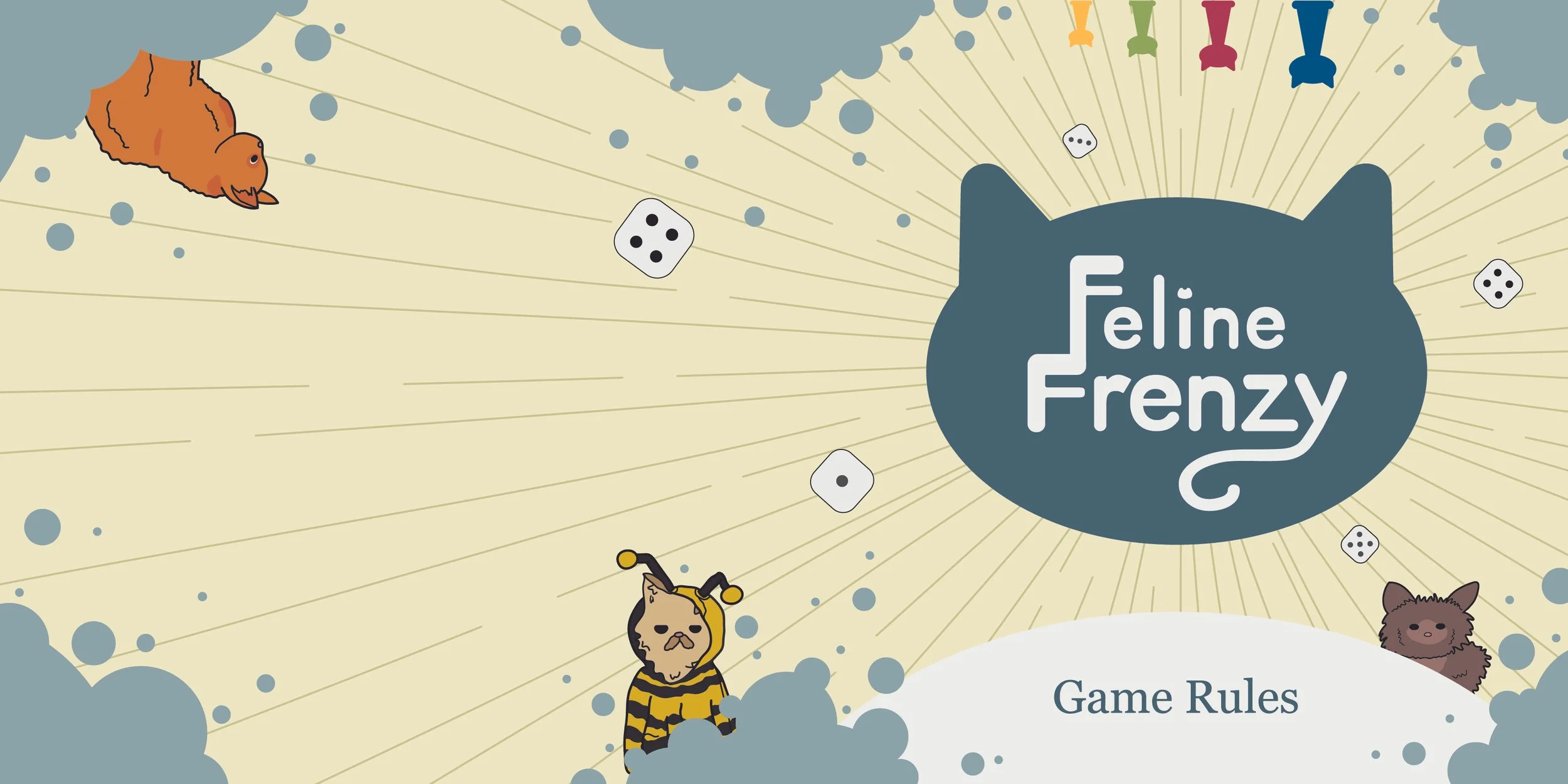
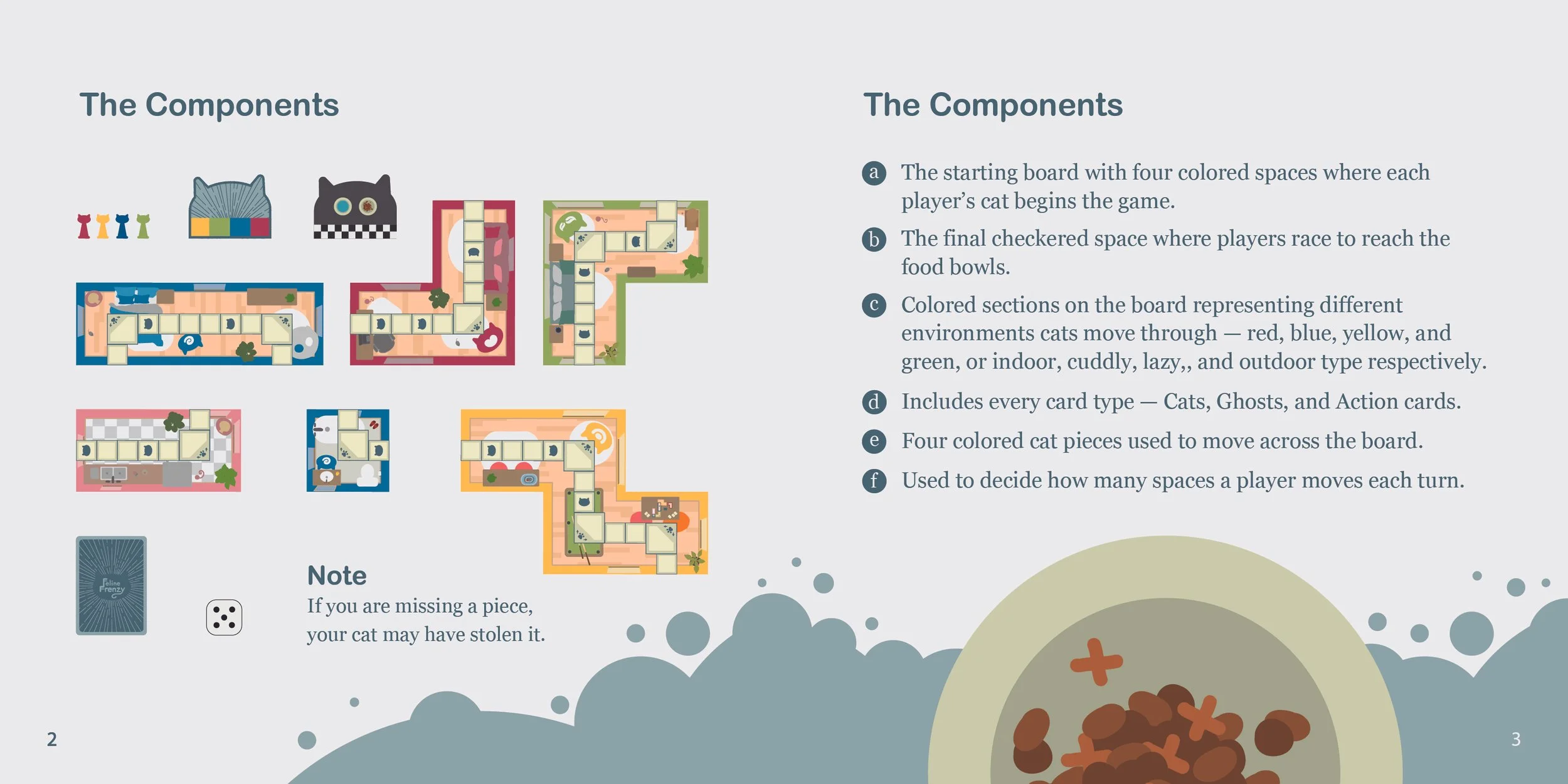
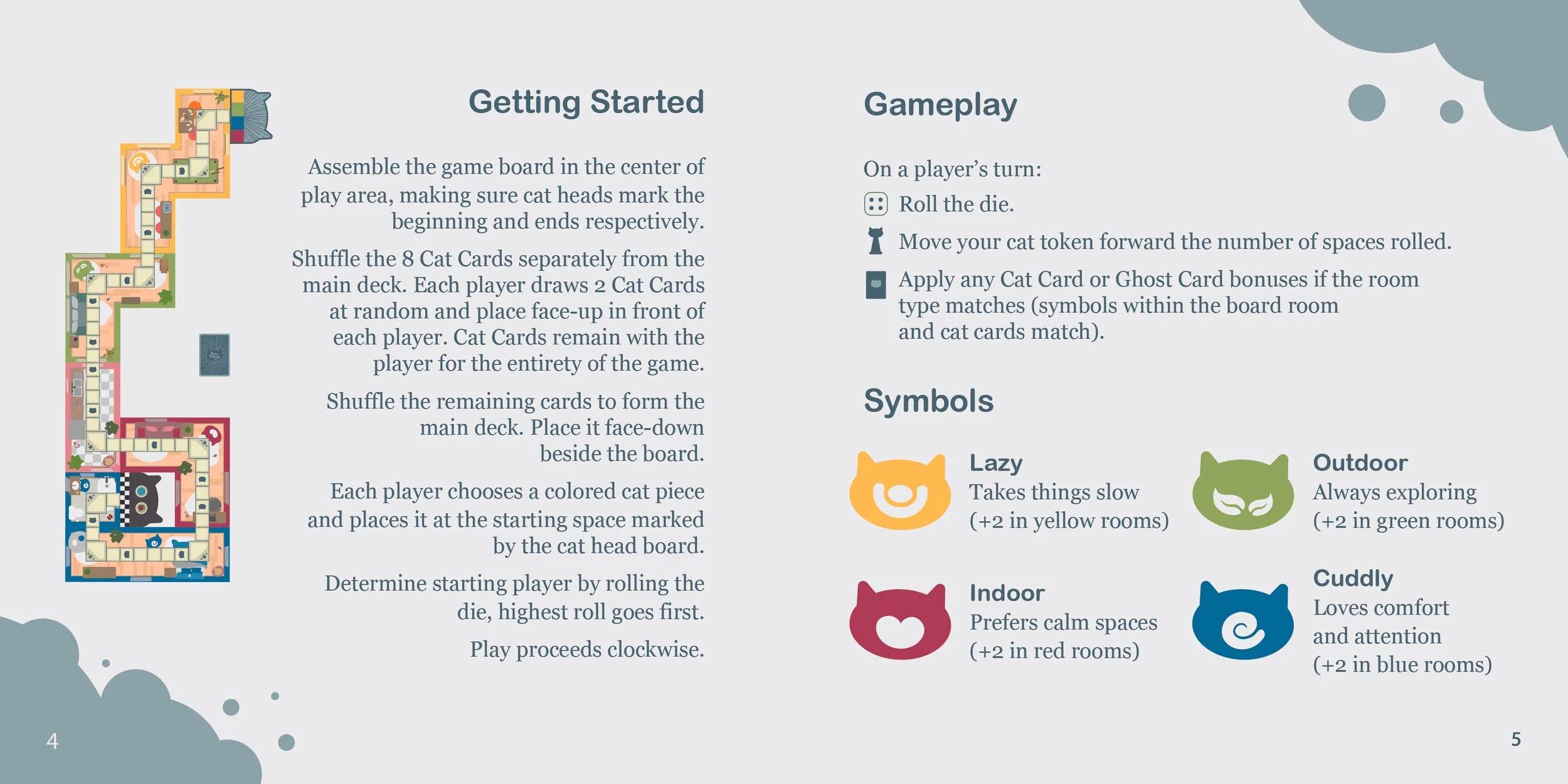
The rulebook for Feline Frenzy was designed to prioritize clarity and ease of use for a game with entirely original mechanics. Rather than introducing a large amount of new visual material, the layout relies primarily on existing illustrations and board details to support the instructions and reinforce visual consistency across the project.
Because the game does not follow a familiar or pre-existing format, the written instructions needed to be especially clear and approachable. To achieve this, I focused on reducing unnecessary language and presenting the rules as plainly as possible. I used AI-assisted editing as a tool to help translate my initial, more descriptive drafts into concise instructional text that remained clear, readable, and functional for gameplay.
In addition to the core rules, the rulebook includes supplementary spreads such as an example board setup to visually demonstrate gameplay, a dedicated page for cat autographs to extend the personality of the game, and a close-up illustration of the food bowl, emphasizing the central goal of the game itself.
Feline Frenzy Animation
The following elements were created specifically for the gallery exhibition and were designed to expand Feline Frenzy beyond the game table. While not required for gameplay, these pieces help present the project as a fully realized, interchangeable system rather than a single fixed experience.
For the exhibition, I created a looping animation to introduce Feline Frenzy as a brand. Using the existing cat illustrations as a starting point, the animation establishes the playful tone of the game before settling into a mostly static logo. Subtle moments of motion appear throughout the loop, reinforcing the idea that the game is never completely still.
This approach reflects the modular nature of Feline Frenzy itself. Just as the board can be rearranged to create a different experience each time the game is played, the animation rewards viewers who spend time with it, revealing small changes over repeated loops rather than presenting everything at once.
Feline Frenzy Advertisements
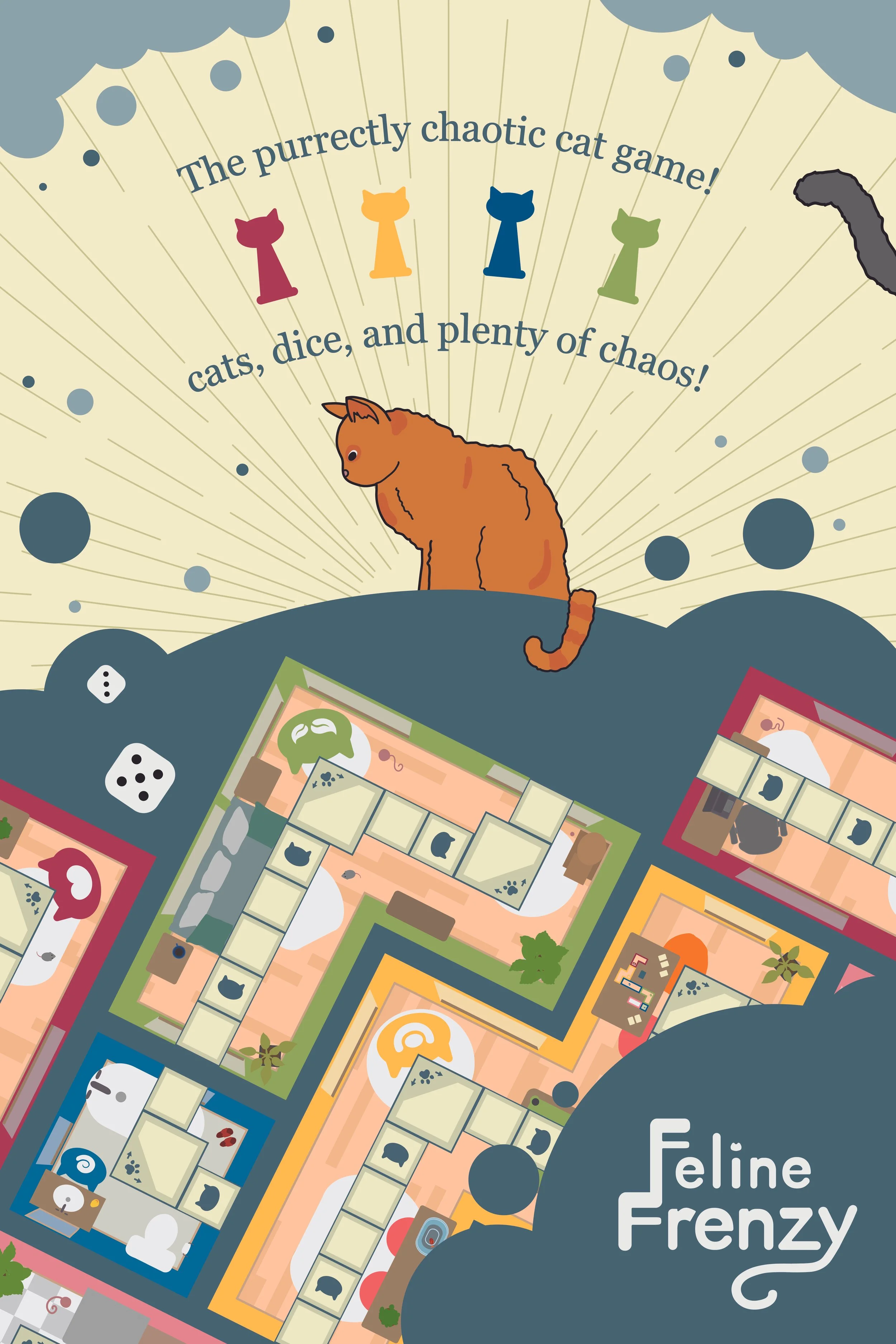
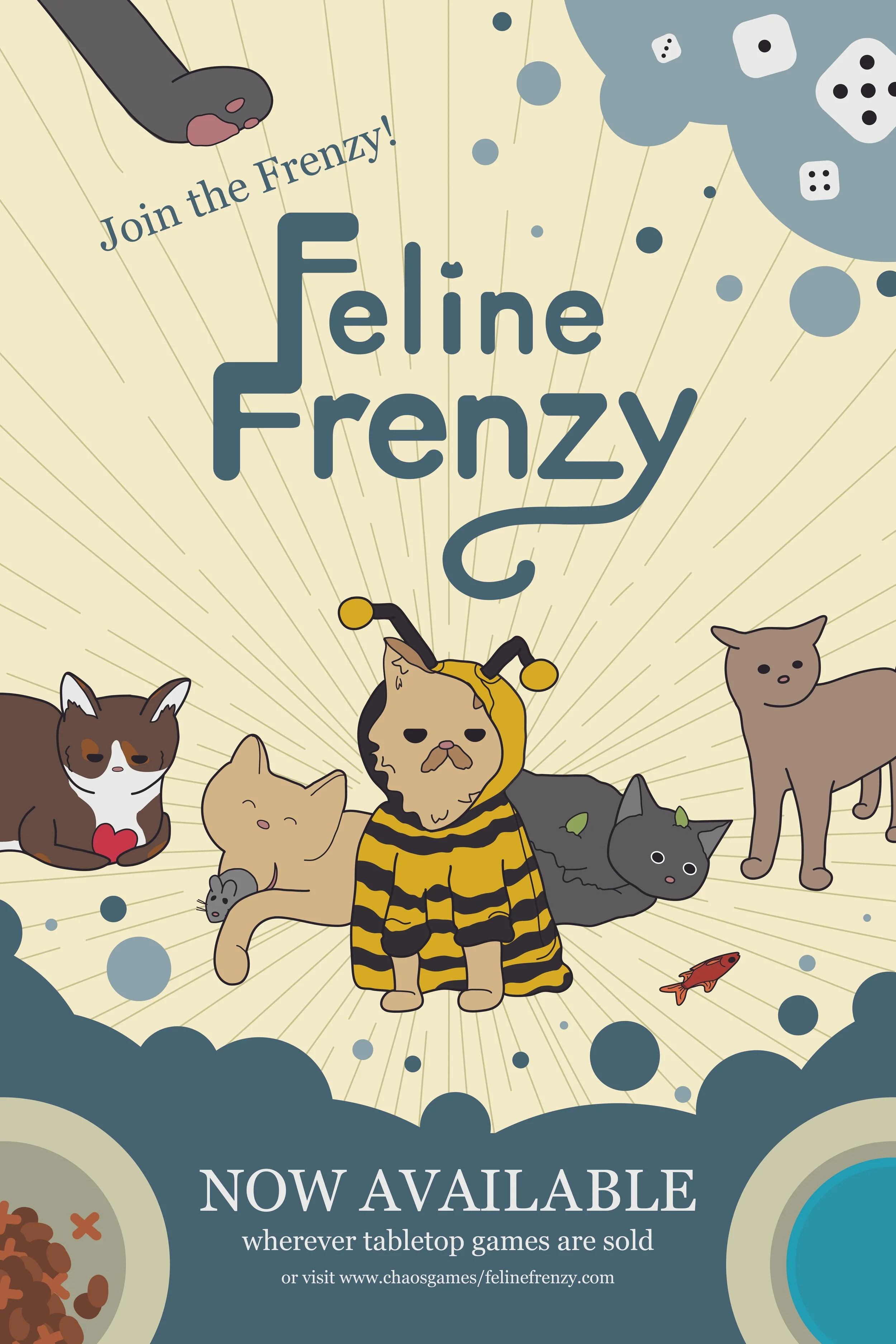
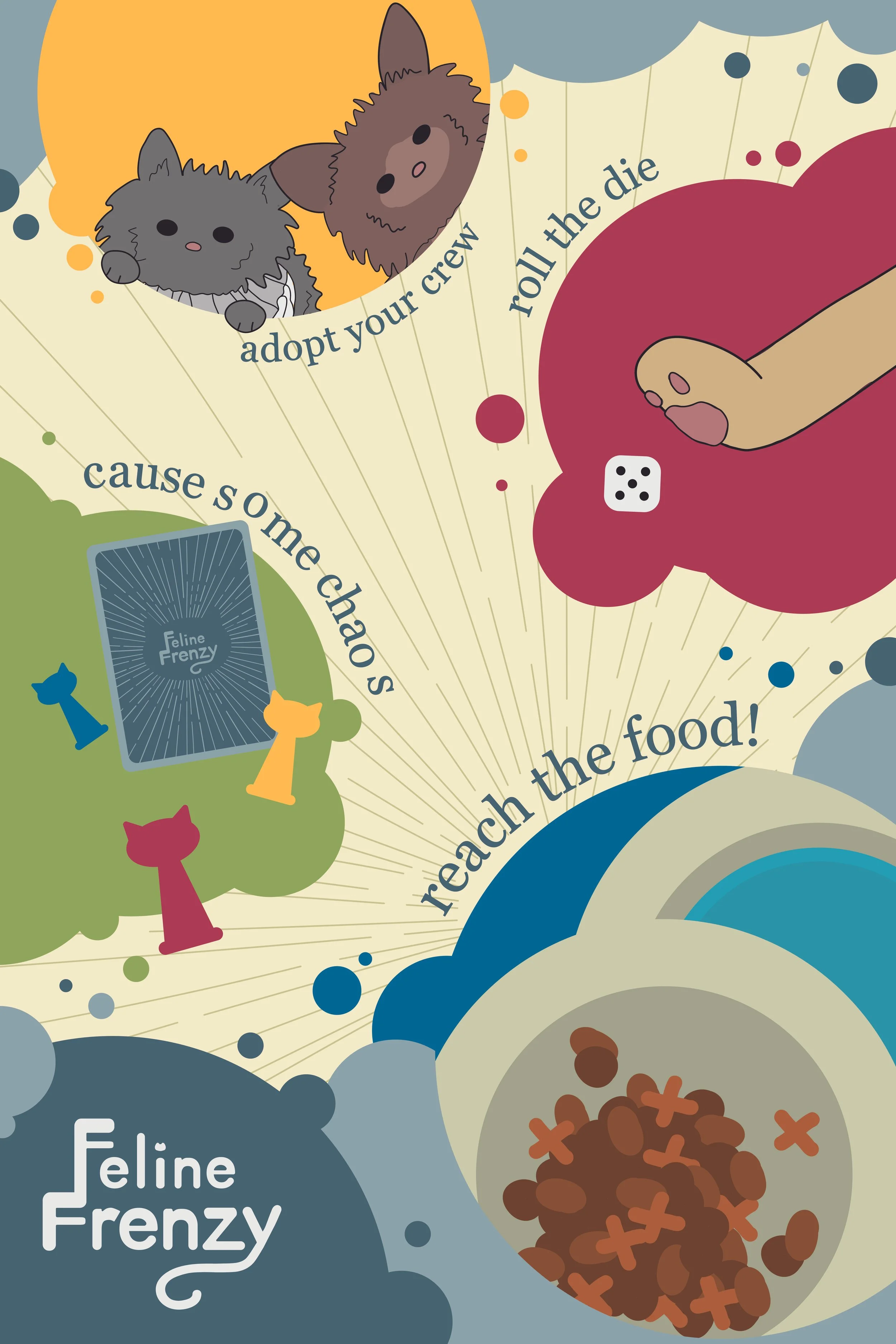
Creating the advertisement posters for Feline Frenzy was a challenge in maintaining cohesion with the existing game design while still standing out as a separate section of the exhibition. To unify the posters, I carried over the circular design motifs from the rulebook and used a consistent background color across all three. This helped them feel visually connected to the rest of the project while highlighting their own focus.
The posters were arranged to guide the viewer’s eye from left to right: the board, the cats, and finally a summary of the rules. Each cat was kept unique to its poster so that no illustrations were repeated, allowing all three to stand side by side without visual redundancy. The center poster was emphasized as the primary focal point, featuring the logo and a fictional website for the game. During the exhibition reception, several visitors asked why the link didn’t work—a small but meaningful testament to how convincing the entire experience felt, from start to finish.
Special Thanks
Thank you for exploring this project from start to finish. While Feline Frenzy is one of my most recent and detailed projects, it remains deeply personal to me. I strive to create work that carries personality and invites viewers to engage closely with its characters and systems, and I believe this project showcases that philosophy beautifully.
If you would like to view more of this project, including gallery photos and additional materials, do not hesitate to reach out through the email in my Contact page.